
Keeping The Lights On
Stack 20

Last week I left you with a quiet mention — John, a lifelong night owl, in bed in the middle of the night when I came home from shows. I told myself he was bored with the band. He probably was. But I was wrong about that being the reason he was in bed. Before we get to what I was wrong about, there’s still some good road to cover.
Because 1991 and into 1992 was also, in a lot of ways, the best Red Red Groove had ever been.
Silence, our second album, was taking shape. The title wasn’t accidental. It was a nod to the Silence = Death movement that had become a rallying cry in the fight against the AIDS crisis. We didn’t talk about our music in overtly political terms very often, but that one meant something. It still does. Acting up and fighting back were themes in a couple of songs on that album as well as in our lives.
Around the same time, we were starting to get some radio play. Our first album had landed some local spins on KTOW, which was exciting enough on its own. But then we recorded a cover of AC/DC’s Dirty Deeds, and that one took on a life of its own. KTOW picked it up, and so did some college radio stations. For a band from Tulsa that had started this incarnation as a two-piece in a rec room, hearing your song on the radio is one of those moments that doesn’t fully compute the first time it happens. You just sit there, a little stunned, waiting for it to be over so you can process what just occurred. It was a neat “first.” Something you can only experience once. Today, while it’s still odd to hear yourself on a radio station, it doesn’t hold the same excitement as it did the first time.
The band was in good shape. The music was connecting. And then the ground started shifting underneath everything else.
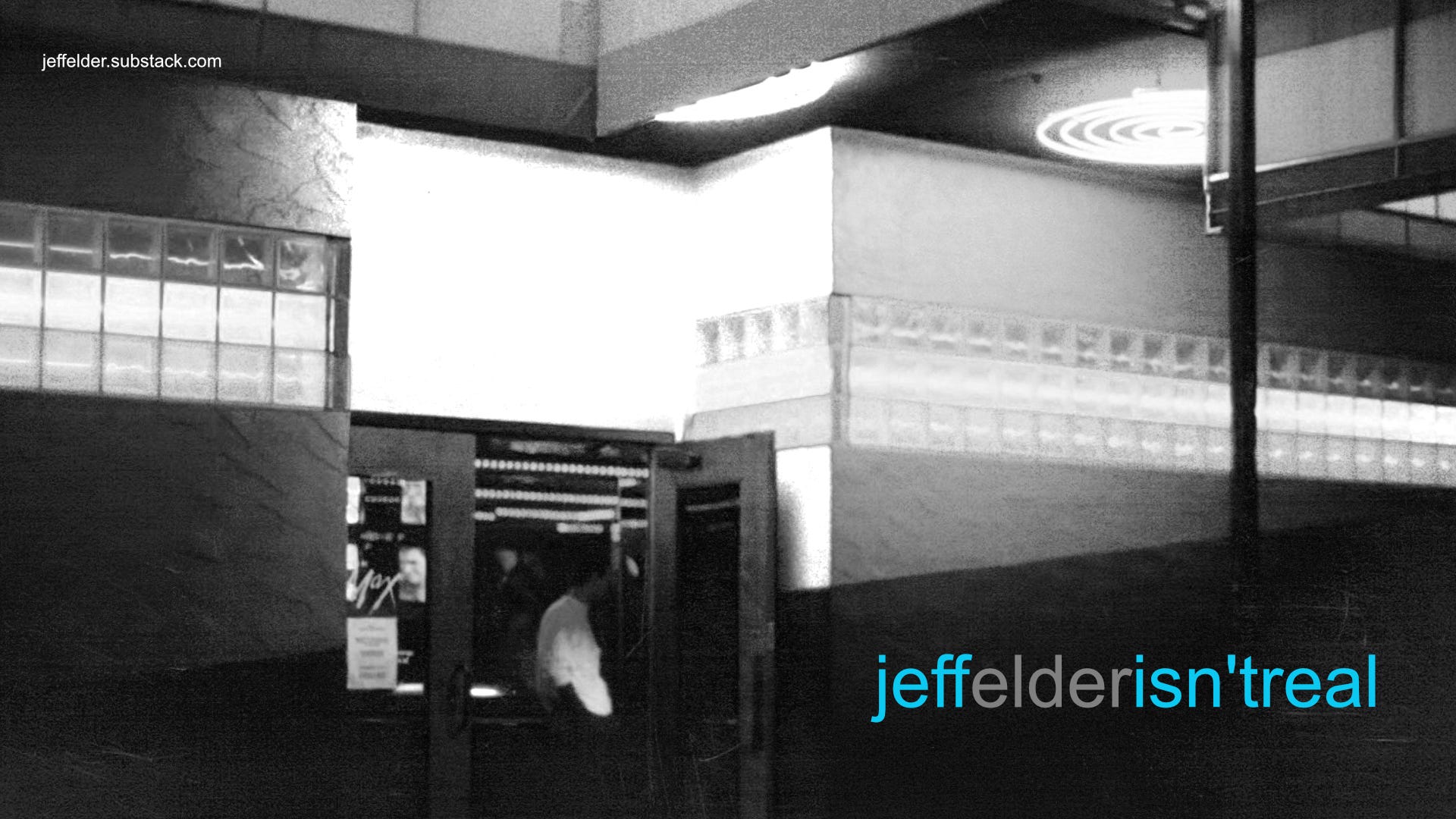
Circa, the bar John had converted The Max into, was struggling. He’d brought in some younger, hipper people to overhaul the look — new interior, new exterior painting, a more modern feel. Less 1980s, more current. Personally, while I liked it, it was probably too current for Tulsa at that time. Anyway, we did a big launch with a local pop radio station. Remote broadcast, giveaways, the whole shebang. We had a great turnout that first night. Energy in the room, for sure. The next night, nothing. The place was dead. The crowd had come for the freebies and gone home. We advertised, we promoted, we tried. It never gained momentum. After a few weeks, the place was empty on nights it should have been full. It was clear that Circa wasn’t going to make it. So, John, Troy and I started brainstorming on what to do in its place.
That’s when Davit stepped in.
Davit, our band manager, had spent years working at a local alternative club called SRO. He had a vision — a proper live music and dance venue that catered to alternative music — something Tulsa didn’t really have at that level. He just needed a space. He asked if I could arrange a meeting with John. I did. The two of them sat down, talked it through, and came to an agreement. John would maintain the lease and licensing. Davit would handle the creative, the booking, the staff, and the vision. And just like that, IKON was born.
I’ll do a deeper dive on IKON another time, because it becomes a significant chapter in its own right — and not always a comfortable one. But for now, what matters is that it gave the space at 3415 South Peoria a new life and a new purpose. IKON would go on to become one of the most well-known alternative live music clubs in the country. Nobody knew that yet, though. We were just trying to keep the lights on.
There was also another force pushing the changes along. A local city councilor had made it her mission to shut down afterhours clubs in Tulsa. She was relentless about it. Circa was not really intended to be an afterhours club. The idea was that, once the holier than thou councilor got her way, we would still be able to operate before 2am. Luckily, IKON managed to find a loophole — offering before hours liquor service — that allowed it to operate in the afterhours space without technically being an afterhours club. It was creative and it worked, for a while. But the councilor kept pushing, kept applying pressure, kept making noise. And John, who had already been fighting to keep his businesses alive through all of these transitions, was feeling it. The stress was wearing on him in ways I could see but didn’t fully register at the time.
Around then, John’s presence during open hours at the club lessened. He used to bounce between his clubs, checking on things, all night. Then, he started checking out earlier and going home. One weekend, he didn’t come to work the clubs with us at all. He just stayed home. He slept. The whole weekend, he slept. That was unusual, but I filed it away as him “being sick,” like having the flu or something, and kept moving.
Early the following week, I went to do some work at the club and came home to an empty house. A little later, I got a call from John’s friend Victor. Victor was a dentist, not John’s doctor, but dentists stay fairly current on medical issues and he had seen something in John’s condition that concerned him. He wasn’t about to let it go. He took matters into his own hands and took John to the hospital.
I made my way there.
Victor met me in the parking lot and walked me up to John’s room. John was sitting up in bed, and the moment I walked in I could see that something was different. He was nervous. Emotional in a way I had never seen from him before. John was not a guy who showed vulnerability easily. This was not that John.
He and Victor exchanged a look. The kind of look that says I’m here, but you’re going to have to be the one to say it.
And then w John told me he had AIDS.
My heart sank. It felt like someone had just punched me in the gut.
He said he hadn’t known. I believed him then. I’m not so sure now. Looking back with the benefit of thirty years and a little more understanding of how these things worked, the timeline doesn’t quite add up. In the early 1990s, HIV testing wasn’t rapid the way it is today. Results took days, sometimes weeks. And a diagnosis of AIDS — not just HIV, but AIDS — suggests a disease that had been progressing for some time. Long enough that someone paying attention might have noticed something. Long enough that a doctor visit somewhere along the way might have raised a flag. I don’t say that with any anger. I say it because it’s the kind of thing you can only see clearly when you’re older and the pieces have had time to settle. Maybe he was protecting me. Maybe he was protecting himself. Maybe both. I’ll never know for certain.
If I had to guess — and at this point, that’s all I can do — I think he probably knew he was positive for a while before that night. My gut says he never told me because, at first, he never expected us to last more than a few nights. And then we settled into something real, and the time was never right, and one day too much time had passed to bring it up without everything falling apart. That’s what I tell myself, anyway. And honestly, I’m not angry about it. You can’t go back and change things. What’s done is done, and carrying resentment about something that happened thirty years ago to someone who is no longer here to defend himself seems like a waste of energy.
Anyway, back to that scene, what I immediately knew, sitting in that hospital room at twenty-two years old, was that my world had just dramatically changed shape.
My immediate family knew I was gay. But living with someone who had full-blown AIDS was going to be something else entirely. Everyone would know now. And everyone would make assumptions. Hell, for all I knew, I was positive too. I had never been tested. I never felt like I needed to be. That certainty felt very unsure now.
John would recover from this episode. But nothing was going to be the same after that. And I had some very hard decisions ahead of me about what came next. We’ll get to those decisions, the IKON stuff, and anything else that comes to mind in the coming weeks. For now, this is probably a good breaking point.
More road ahead next week. Try to make yours a good one.
Jeff